 comparison
Xcelacore Alternative for Logistics Automation: 2026 Guide
Table of Contents
- Why Look Beyond Xcelacore for Logistics Automation?
- Scale Partners AI vs. Off-the-Shelf Logistics Automation Software Platforms
- Alternative 1: ShipStation for simplified Order Fulfillment
- Alternative 2: Shippo for API-First Logistics Automation
- Alternative 3: Custom Development Partners like Innovecs and RaftLabs
- How to Calculate Logistics Automation ROI Before You Commit
- Best Practices for Logistics AI Integration Without a Rip-and-Replace
- Which Logistics Automation Approach Fits Your Operation?
- Frequently Asked Questions
Last Updated: September 9, 2026
Why Look Beyond Xcelacore for Logistics Automation?
Most logistics automation software platforms promise end-to-end control but deliver fragmented tools. When operations managers evaluate an xcelacore alternative for logistics automation, the real question isn't which vendor has the longest feature list. It's which approach will integrate with the WMS, TMS, and ERP you already run without a costly rip-and-replace.
At Scale Partners AI, we've spent 15 years inside logistics operations, and the pattern is consistent: off-the-shelf platforms solve one silo while creating two new manual workarounds elsewhere. A logistics automation solution is only valuable when it reduces manual coordination across dispatch, inventory, and last-mile delivery without requiring you to rebuild your digital freight platform from scratch.
What most guides miss is the difference between buying a tool and building a capability. Off-the-shelf logistics automation software platforms give you standardized workflows. Custom development gives you automated decision-making tuned to your specific load planning, carrier management, and exception management rules.
Scale Partners AI vs. Off-the-Shelf Logistics Automation Software Platforms
The decision between Scale Partners AI and a traditional logistics automation software platform comes down to one factor: whether your operation fits the vendor's assumptions about how warehouses and fleets should run.
Off-the-shelf platforms like ShipStation and Shippo excel at standardized tasks such as batch label printing, multi-carrier rate comparison, and order importing. They deliver operational efficiency quickly, but their workflow automation is rigid. When your operation involves three warehouses, thousands of SKUs, and exception management across multiple carriers, the platform's fixed logic becomes the bottleneck.
Scale Partners AI takes the opposite path. Instead of forcing your operation into pre-built modules, we build production-ready AI systems around your existing software stack. No rip-and-replace. Our weekly "fix this" recommendations identify specific margin leaks and give you real-time visibility into true per-SKU profit. This is logistics orchestration that respects your current infrastructure while adding the predictive analytics layer off-the-shelf tools lack.
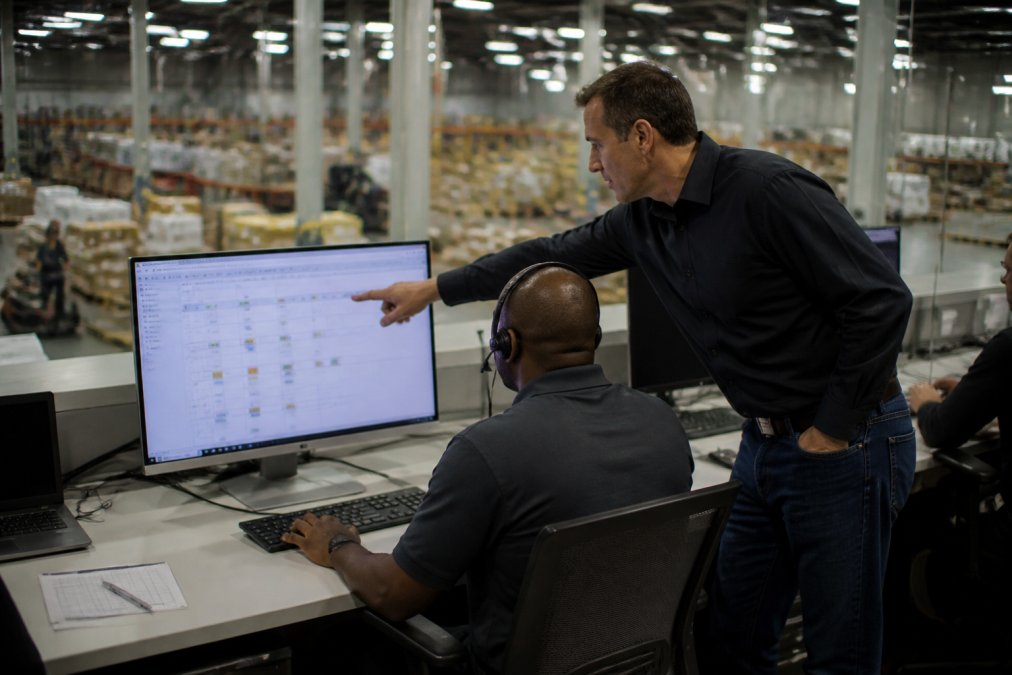
For mid-sized 3PL providers and multi-channel ecommerce founders, the differentiator is whether you want software to manage your operation or a system built to optimize your specific margins. Custom AI development through Scale Partners AI delivers the latter without migration complexity.
Alternative 1: ShipStation for simplified Order Fulfillment
ShipStation is a web-based shipping automation platform built to centralize order fulfillment for ecommerce businesses (shipstation.com). It automates order importing, batch label creation, and branded tracking emails. For merchants drowning in manual label printing, it delivers immediate relief.
The platform integrates with major carriers including USPS, UPS, and FedEx, and its library of marketplace integrations is extensive. Automation rules let you customize workflows for carrier selection and packing slip generation.
Where ShipStation falls short is advanced reporting, restricted to higher-tier plans, and its limited warehouse management system functionality. It's a shipping tool, not a logistics orchestration layer. If your bottleneck is last-mile label generation, ShipStation works. If you need shipment prioritization or predictive analytics across a multi-fleet operation, it won't scale.
Alternative 2: Shippo for API-First Logistics Automation
Shippo takes a developer-first approach to multi-carrier shipping software. Its free tier and pay-per-label pricing model make it attractive for businesses wanting transparent costs without subscriptions (shippo.com).
The platform's real strength is its API-first architecture. Real-time rate comparison, automated return label generation, and address validation all sit behind clean developer documentation. For teams building custom logistics workflows, Shippo's API integration is straightforward.
The trade-off is depth. Shippo lacks advanced warehouse management features and doesn't address middle-mile orchestration or dispatch coordination. It solves the shipping label problem elegantly but leaves inventory management, load planning, and carrier management untouched. For end-to-end logistics automation, you'll need additional systems.
Alternative 3: Custom Development Partners like Innovecs and RaftLabs
When off-the-shelf tools can't handle your complexity, custom development partners fill the gap. Innovecs specializes in WMS integration, TMS engineering, and ERP modernization. RaftLabs offers custom logistics automation builds with AI-driven consulting.
These firms excel at bridging disparate legacy systems and building bespoke software architecture. If your operation runs on custom-coded systems that no SaaS platform supports, a development partner can construct the integration layer you need.
The drawback is implementation time and ongoing oversight. Custom development requires active project management from your team, and the lifecycle stretches longer than deploying a SaaS platform. For lean operations teams already stretched thin, the resource drain can outweigh the benefits.
How to Calculate Logistics Automation ROI Before You Commit
Before signing with any logistics automation software platform, model the ROI against your actual operational data. Skip the vendor's generic estimates and build your own cost-benefit analysis.
Start with your current baseline. Calculate the labor hours spent weekly on manual dispatch coordination, order consolidation, and exception management. Assign a loaded hourly cost. Then estimate the reduction: most operations find that automating repetitive tasks cuts that labor by a meaningful margin.
Next, quantify error costs. Address validation failures, mis-sorted shipments, and delayed carrier handoffs each carry a real dollar cost in re-shipping and customer churn. Finally, factor in integration and migration costs, including implementation time and disruption to ongoing operations.
| Cost Factor | Off-the-Shelf Platform | Custom AI Development |
|---|---|---|
| Implementation time | Days to weeks | Weeks to months |
| Integration complexity | Limited to supported connectors | Built around your existing stack |
| Workflow fit | Standardized processes | Tuned to your operation |
| Ongoing maintenance | Vendor-managed | Client or partner-managed |
| Scalability | Limited by platform features | Grows with your operation |
Best Practices for Logistics AI Integration Without a Rip-and-Replace
Logistics AI integration succeeds when it follows a human-in-the-loop approach rather than attempting full autonomy on day one. Start with one workflow, prove the value, then expand. Moving from a legacy TMS or WMS to an AI layer requires a concrete migration plan addressing data security, API compatibility, and exception-handling authority.
Step 1: Run a Data Privacy and Security Audit Before Any API Connection
Before you connect any third-party AI model to your supply chain data, map exactly what data will cross the API boundary (the FTC). Most logistics platforms will ingest shipment histories, carrier contracts, and customer addresses. Feeding that data into a vendor's cloud model creates a compliance obligation under relevant data privacy laws if you handle sensitive shipments.
A common pattern among mid-market 3PLs is to sign a data processing agreement (DPA) that limits how the vendor can use your data for model training. But the DPA only helps if you know which data fields are actually transmitted. Before integration, run a data flow audit: list every field your WMS exports, flag any PII or proprietary rate data, and require the vendor to confirm whether that data is used beyond serving your instance. If the vendor cannot guarantee data isolation, that is a red flag.
Step 2: Use a Parallel Run to Validate AI Recommendations Without Operational Downtime
The most common failure in logistics AI integration is switching from a legacy system to an AI-driven platform in one cutover. Instead, run the AI layer in parallel with your existing TMS or WMS for at least two full billing cycles. During this run, the AI generates recommendations, shipment prioritization, load consolidation, carrier selection, but your dispatchers continue to execute through the legacy system. You compare the AI's suggested actions against what your team actually did.
This approach preserves operational continuity because your team never loses access to the system they know. It also gives you a concrete dataset to calculate ROI before full cutover. Most practitioners find that two to four weeks of parallel running is enough to surface exception patterns the AI cannot handle.
Step 3: Define the Human-in-the-Loop Authority Matrix
A human-in-the-loop workflow is not just about letting operators override the AI, it is about defining who has authority to override, under what conditions, and how those overrides feed back into the model. For routine shipments, the AI can auto-execute. For exceptions, a hazmat shipment, a customer with a history of delivery disputes, a carrier in a service failure window, the system should flag the decision to a supervisor with a clear reason code.
A practical mechanism is to configure the AI to pause on any shipment that exceeds a defined threshold, such as a load value above $50,000 or a delivery window with less than a 90% confidence score. The system sends an alert to the dispatch lead, who either approves the recommendation or manually overrides it. Every override is logged and used to retrain the model.
Step 4: Prioritize API Integration Over Data Migration
Your WMS, ERP, and TMS contain years of historical data. A system that integrates through APIs preserves that data and your team's existing workflows. Cloud-based logistics solutions that layer AI on top of your current stack deliver faster time-to-value than migrating. The key is to verify that the vendor's API supports bidirectional data flow, not just pulling data out of your WMS, but pushing decisions back into it. A read-only API gives you visibility but no execution capability.
Which Logistics Automation Approach Fits Your Operation?
The right logistics automation approach depends on your operation's complexity, your team's technical capacity, and your tolerance for disruption. But the decision is rarely binary. Most mid-market operations end up with a hybrid: a SaaS platform for standardized shipping tasks plus a custom AI layer for exception-heavy workflows. The real question is where to draw that line.
Decision Framework: Build vs. Buy vs. Hybrid
Use this framework to evaluate your operation against the three viable paths. Score each factor on a scale of 1 to 5, where 1 means the factor is not a constraint and 5 means it is a critical driver.
| Decision Factor | Off-the-Shelf Platform (ShipStation, Shippo) | Custom Development Partner (Innovecs, RaftLabs) | Scale Partners AI (Hybrid AI Layer) |
|---|---|---|---|
| Deployment speed | 1-2 weeks | 3-6 months | 4-8 weeks |
| Integration with legacy WMS/TMS | Limited to pre-built connectors | Full custom API work | API-based, built around existing stack |
| Workflow flexibility | Fixed logic, adapt your process | Fully bespoke | Tuned to your operation, human-in-the-loop |
| Data security control | Vendor-managed cloud | Client-controlled infrastructure | Client-controlled with DPA |
| Ongoing maintenance burden | Low (vendor-managed) | High (your IT team or partner) | Medium (partner-managed) |
| Total cost of ownership (3-year) | $10K-$50K for mid-volume | $150K-$500K+ | $50K-$150K |
Your actual TCO depends on shipment volume, number of warehouses, and carrier contract complexity. The off-the-shelf platform looks cheapest on paper but often carries hidden labor costs when your team builds manual workarounds for exceptions.
When Off-the-Shelf Wins: The Standardization Test
Choose an off-the-shelf platform like ShipStation or Shippo if your operation passes the standardization test. That means your shipping workflows are uniform across channels, your exception rate is below 5% of total shipments, and you do not need real-time visibility into per-SKU profitability. If you run a single warehouse, ship fewer than 500 orders per day, and your carriers are limited to USPS, UPS, and FedEx, a SaaS platform can deliver significant value.
The risk is that you outgrow the platform. ShipStation's advanced reporting is locked behind higher-tier plans, and Shippo's API does not address middle-mile orchestration or dispatch coordination. If your operation grows to multiple warehouses or adds a private fleet, you will face a second migration, this time out of the SaaS platform, which is more disruptive than building the right architecture initially.
When Custom Development Wins: The Proprietary Systems Test
Choose a custom development partner like Innovecs or RaftLabs if your operation runs on proprietary systems that no SaaS platform supports. This is common for 3PLs that have built custom-coded warehouse management logic over a decade or more. If your WMS is a legacy AS/400 system or a heavily modified open-source platform, no off-the-shelf logistics automation tool will integrate cleanly. A development partner can build the integration layer you need, but you must have dedicated IT staff to manage the project and maintenance.
The hidden cost of custom development is not the hourly rate, it is the opportunity cost of your team's time. A 6-month development cycle requires active product management from your operations team, pulling them away from daily logistics coordination. If your team is already stretched thin, the resource drain can outweigh the benefits.
When the Hybrid Approach Wins: The Exception Rate Test
Choose the hybrid approach, Scale Partners AI or a similar AI-layer partner, if your operation has a moderate exception rate (5-15% of shipments) and you need AI-driven optimization without replacing your existing WMS or TMS. The hybrid model layers predictive analytics on top of your current stack, preserving your team's workflows while adding the intelligence layer off-the-shelf tools lack.
This approach is strongest for mid-sized 3PL providers and multi-channel ecommerce founders who need real-time per-SKU profitability visibility and weekly "fix this" recommendations. The AI handles the predictable volume, shipment prioritization, load consolidation, carrier selection, while your dispatchers retain authority over exceptions. The trade-off is that you need a partner who understands both your legacy systems and modern AI architecture.
The data-driven logistics operation you want isn't about buying the most feature-rich platform. It's about building the right infrastructure around the systems you already trust, and being honest about whether your operation is standard enough for SaaS or complex enough to justify a custom AI layer.
Frequently Asked Questions
What features should I look for in a logistics automation platform?
Prioritize system interoperability. Your platform must connect with your existing warehouse management system, carriers, and ERP without a full rip-and-replace. Look for real-time tracking, automated dispatch coordination, and exception management. Ensure it handles order consolidation and shipment prioritization for your specific volume. The best logistics automation software platforms offer API integration and scalability. Avoid tools that require manual workarounds for core tasks, and confirm the vendor can handle your per-SKU complexity.
Is custom AI development better than off-the-shelf logistics software?
Off-the-shelf tools like ShipStation or Shippo are fast to deploy and work well for specific tasks like label generation and rate comparison. Custom AI development, such as what Scale Partners AI provides, is better when your operation has unique workflows or messy data that standard platforms can't handle. Custom systems integrate with your existing stack to improve per-SKU profitability and labor coordination without changing your core processes. The right choice depends on whether you need a targeted fix or a system tailored to your complexity.
How does AI integration impact per-SKU profitability?
AI integration gives you real-time visibility into true per-SKU profit by automatically calculating landed costs, storage fees, and channel-specific overhead that spreadsheets often miss. It flags bundling opportunities and slow-moving inventory that erode margins. Instead of static reports, you get weekly, actionable recommendations. This data-driven approach lets you adjust pricing or promotions quickly. For multi-channel operations, this visibility is the difference between guessing and knowing which products actually make money.
What is the actual cost of implementing logistics automation?
Cost depends on the approach. SaaS platforms like Shippo have transparent pay-per-label pricing, while ShipStation has a monthly subscription. Custom development partners often charge hourly or project-based fees. For a custom AI integration, pricing depends on the complexity of your systems and the scope of the work. Scale Partners AI does not publish fixed prices because each implementation is tailored. Contact them for a quote to understand the investment required for your specific operation.