 how-to
Data Driven Insights for Fitness Studios in 2026
Table of Contents
- What Data Driven Insights Mean for a Fitness Studio
- Fitness Studio KPI Dashboard: The Metrics That Matter Most
- Optimizing Labor Scheduling for Fitness Studios with Data
- Gym Member Retention Strategies Backed by Data
- Low-Cost DIY Data Tracking for Smaller Studios
- Data Privacy and Compliance: What Studio Owners Must Know
- Building Staff Data Literacy Without a Dedicated Analyst
- Conclusion
- Frequently Asked Questions
Last Updated: September 22, 2026
What Data Driven Insights Mean for a Fitness Studio
Data driven insights for fitness studios means turning the numbers you already collect into weekly decisions about staffing, classes, and members at risk of leaving. This guide from Scale Partners AI breaks down the metrics that matter, how to track them on a small budget, and how to stay compliant while you do it.
Most studio owners already sit on useful data. It hides in booking systems, front-desk logs, and payment records. The problem is not a lack of information. It is that nobody turns it into a decision.
That is the gap data driven insights close. A studio that reads its own numbers can spot a fading member before they cancel. It can staff a quiet Tuesday correctly. It can see which class times actually make money.
Below, we cover the exact metrics to track, the cheapest ways to track them, and the privacy rules that apply. The goal is simple: fewer guesses, better margins.
Fitness Studio KPI Dashboard: The Metrics That Matter Most
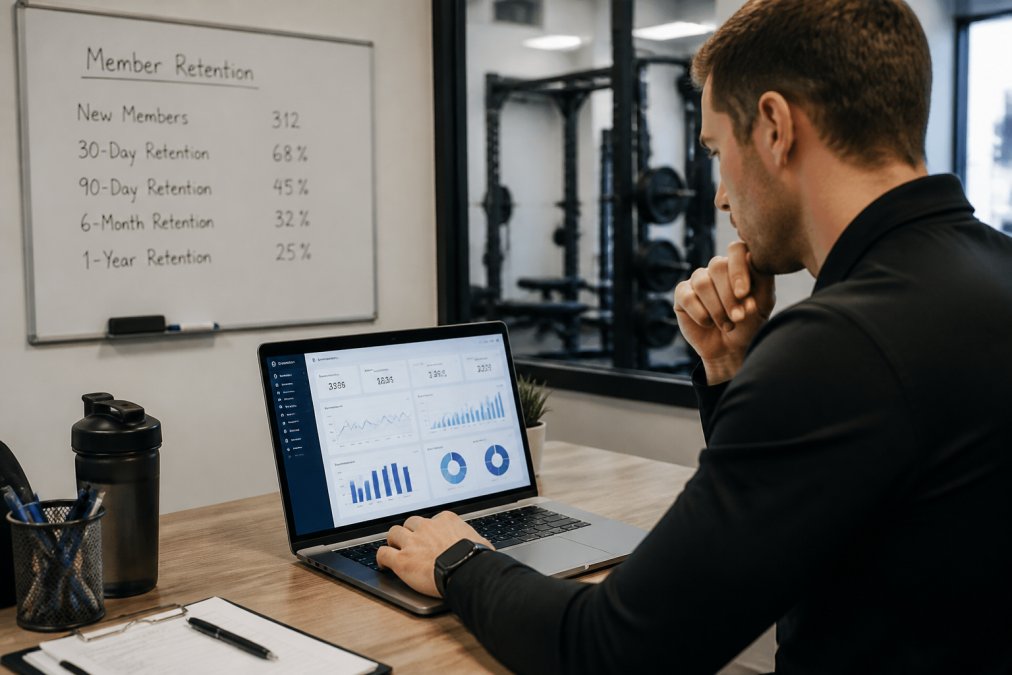
A fitness studio KPI dashboard should track a small set of numbers that predict revenue and retention, not every figure your software can produce. Start with two groups: retention and churn metrics, then operational and revenue metrics.
Too many owners build a dashboard with forty tiles. They check it twice and never open it again. A useful dashboard fits on one screen.
Retention and Churn Metrics
Member retention is the share of members who stay over a set period. Your churn rate is the share who leave. These two numbers drive almost everything else in a studio.
Track these each month:
- Monthly churn rate - members lost divided by members at the start
- Average member lifespan - how many months a typical member stays
- Customer lifetime value - total revenue per member over their time with you
- Attendance patterns - how often active members actually visit
A member who stops showing up is usually a member who is about to cancel. Attendance is the early warning signal.
Operational and Revenue Metrics
Operational efficiency shows whether your studio runs well on the hours and space you have. Revenue metrics show whether that effort pays off.
Watch these weekly:
- Peak occupancy - how full the studio is at your busiest hours
- Class use - booked spots versus open spots per class
- Revenue per member - total revenue divided by active members
- Cost per class - instructor and space cost per session
Low class use at a popular time is a scheduling problem. Low use at a quiet time is a marketing problem. The numbers tell you which one you have.
Optimizing Labor Scheduling for Fitness Studios with Data
Optimizing labor scheduling for fitness studios means matching instructor hours to real attendance patterns instead of habit or guesswork. Most studios overstaff quiet hours and understaff the ones members actually want.
Start with four weeks of attendance data. Group it by hour and day. You will usually find two or three slots that carry the studio and several that barely fill.
Then rebuild the schedule around those patterns:
- Cut or merge classes with low use
- Add sessions where waitlists keep forming
- Match senior instructors to your highest-value time slots
- Keep a small buffer for walk-ins at peak hours
A common mistake is cutting too fast. Test one change at a time and watch attendance for two weeks before the next move.
Gym Member Retention Strategies Backed by Data
Gym member retention strategies work best when they target specific members, not the whole list. Blanket emails and generic check-ins rarely move the churn number.
The most effective approach is tiered outreach based on behavior:
- New members (first 30 days): personal check-in after the second visit
- Fading members (no visit in 14 days): a short, direct message asking what changed
- Loyal members (visiting weekly): referral asks and upgrade offers
- At-risk members (payment issues or paused plans): a call, not an email
Client onboarding deserves special attention. Members who complete a structured first month stay far longer than those who are left to figure it out alone.
Predicting Churn Before It Happens
Predictive modeling for churn sounds advanced, but the logic is simple. You look for the behaviors that came before past cancellations, then watch for them in current members.
Common warning signs:
- Visit frequency drops by half
- The member stops booking their usual class
- A payment fails or a plan pauses
- No check-in for two weeks or more
When two or more signs stack up, that member needs a human touch. A quick call from a coach often saves the membership. Waiting for the cancellation email does not.
Low-Cost DIY Data Tracking for Smaller Studios
Small studios do not need enterprise software to start. A simple spreadsheet and your existing booking system can carry you a long way.
Here is a starter setup that costs nothing but time:
- Export your member list and last visit date each week
- Log attendance by class and hour in one shared sheet
- Track monthly revenue and member count in two columns
- Add a churn column: who left, and when they last visited
- Review the sheet every Monday for 15 minutes
That review is the whole point. Automated tracking helps, but a weekly habit beats a tool nobody opens.
Once the manual version works, you can layer in real reporting. This is where a partner like Scale Partners AI fits. We build systems around the software you already use, with no rip-and-replace, and send weekly "fix this" recommendations instead of slide decks. You can see how that works on our Scale Partners AI case studies page.
Data Privacy and Compliance: What Studio Owners Must Know
Member data is personal data, and it comes with legal duties. In the United States, there is no single federal privacy law covering every fitness studio. Instead, a patchwork of state laws applies based on where your members live, and a few federal rules apply to specific data types regardless of state.
The state laws that most often apply. If you serve members in California, the California Consumer Privacy Act (CCPA), as amended by the CPRA, gives members the right to know what you collect, to request deletion, and to opt out of certain sharing (California Consumer Privacy Act (CCPA) | State of California - Department of Justice).
- HIPAA generally does not cover a fitness studio, but it does cover any protected health information you receive from a healthcare provider, insurer, or employer wellness program. If you accept referrals from a physical therapist or run a corporate wellness contract, that data is in scope.
- The FTC Act prohibits unfair or deceptive practices, which means your posted privacy policy is a binding promise. If you say you do not share data and you do, that is a violation regardless of which state the member lives in.
A practical compliance checklist:
- Collect only what you need: name, contact, payment, and health notes that serve a clear purpose
- Publish a plain-language privacy policy that names the categories you collect and why
- Give members a working way to request a copy or deletion of their data, an email address is enough if you actually respond
- Store data in one place with role-based access; front desk does not need injury notes
- Delete data on request within the timeframe your state requires (30 days is a safe default)
- Keep health information separate and locked down, with a written retention limit
Building Staff Data Literacy Without a Dedicated Analyst
Your front-desk team can run a dashboard if you teach them what to look at. You do not need a dedicated analyst to make data driven insights stick.
Then assign clear roles:
- Front desk: flag members with no visit in 14 days
- Coaches: note who seems disengaged in class
- Manager: review the dashboard and pick one fix per week
Conclusion
The hardest part of data driven insights is not the software. It is building the weekly habit of looking, deciding, and acting.
Frequently Asked Questions
What does it mean for a fitness studio to be data-driven?
Being data-driven means using actual member behavior and operational numbers to make decisions, not guesses. You track attendance patterns, churn rate, class utilization, and revenue per member. Then you act on what the data shows, like adjusting class times or following up with at-risk members. It replaces gut feelings with evidence.
Which key performance indicators should fitness studios track?
Focus on five core KPIs: member retention rate, average revenue per member, class attendance rate, peak occupancy, and customer lifetime value. These tell you if members are staying, spending, and showing up. Track them weekly in a simple dashboard. If retention drops, you know to investigate onboarding or engagement issues immediately.
How can data analytics improve member retention rates?
Data analytics spots at-risk members before they cancel. By tracking attendance drops, payment delays, or reduced class bookings, you can trigger automated outreach or personal check-ins. Simple churn prediction models help you act early instead of reacting after someone leaves.
How do you collect actionable data from gym management software?
Most gym software already logs check-ins, class bookings, and payments. Export that data weekly into a spreadsheet or connect it to a simple dashboard tool. Look for patterns like no-shows, peak hours, and member tenure. Clean the data by removing duplicates and test entries. Then set up alerts for sudden changes, like a 20% drop in weekly attendance.